
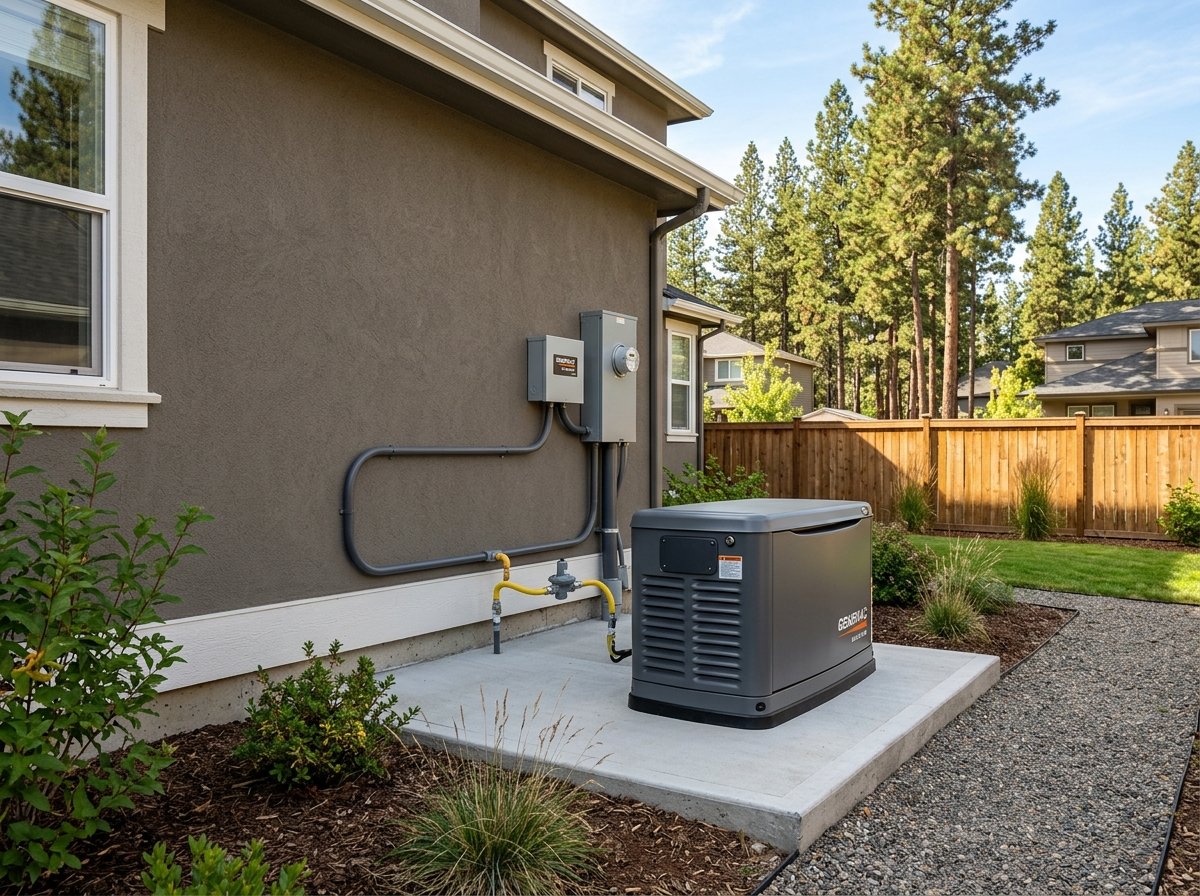
Turnkey Generator Installation Scope Across Kootenai County
An extended power outage in North Idaho is a serious household emergency. When winter storms drop temperatures below zero, losing electricity turns off heating blowers, freezes water pipes, and disables private well pumps. At Post Falls Expert Electricians, we provide complete, turnkey standby generator solutions.
Our comprehensive installation scope covers every phase of your project. We perform NEC Article 220 load calculations and coordinate fuel piping. We also pour equipment pads, wire transfer switches, and secure state electrical permits.
We serve homeowners across all Post Falls neighborhoods, including Prairie Falls, Riverbend, Montrose, Fieldstone, and Expo. We also deploy certified technicians across Rathdrum, Coeur d'Alene, Hayden, and Hauser Lake. Whether you live in a suburban subdivision or on a rural timbered parcel, we engineer dependable backup power.
Electrical Panel Compatibility & Heavy-Up Options
Connecting a whole-home automatic transfer switch requires adequate service entrance capacity. If your home has an aging 100-amp panel, we often pair your generator project with an electrical panel upgrade to 200 amps. Homeowners adding high-demand electronics also frequently combine backup power with our dedicated EV charger installation in Post Falls.
Idaho State Permitting & Kootenai County Code Compliance
Installing a permanent standby generator involves high-voltage electrical circuits and pressurized fuel lines. The state of Idaho strictly regulates these systems to prevent dangerous electrical backfeeding and fire hazards.
Idaho DOPL Electrical Permitting: Every standby generator installation requires an official electrical permit from the Idaho Division of Occupational and Professional Licenses (DOPL). Our licensed master electricians submit detailed wiring schematics and load calculations directly to the state.
Kootenai County Setback Regulations: Standby generators must comply with NFPA 37 fire safety codes and local zoning rules. Units must sit at least 18 inches away from non-combustible exterior walls. Furthermore, exhaust outlets must sit at least 5 feet from operable windows, exterior doors, and crawlspace vents.
Electric Utility Coordination: Standby generators connect directly between your electric meter and breaker panel. We coordinate service disconnects and reconnections with Avista Utilities and Kootenai Electric Cooperative (KEC). Our automatic transfer switches ensure 100% isolation, preventing power from feeding back into utility lines.
Standby Generator Equipment Tiers: 14kW to 48kW+
We install market-leading standby generator systems from Generac and Kohler. Equipment capacity depends on home square footage, heating systems, and electrical load demand:
Tier 1: Essential Circuit Systems (14kW – 18kW)
Air-cooled units paired with a 16-to-24 circuit transfer switch. Powers heating blowers, refrigerators, freezers, basic lighting, internet modems, and dedicated well pump circuits during grid outages.
Tier 2: Whole-Home Standby Systems (22kW – 26kW)
The standard choice for Post Falls homes up to 3,500 sq ft. Paired with a 200A service-rated transfer switch to power central heat pumps, electric water heaters, ranges, and all household outlets.
Tier 3: Estate & Commercial Liquid-Cooled (30kW – 48kW+)
Low-speed 1,800 RPM liquid-cooled commercial engines. Designed for large acreage estates, multi-structure properties, 400A split services, and light commercial facilities requiring continuous three-phase power.
Automatic Transfer Switches (ATS)
Service-rated 200A and 400A ATS units featuring smart load shedding. The switch monitors grid line voltage continuously and starts the generator automatically within 10 to 15 seconds of power loss.
Standby Generator Installation Pricing in Post Falls, ID
We deliver upfront written proposals before any work commences. Below are typical turnkey investment bands for residential and commercial generator projects in Kootenai County:
Cost Factors That Influence Generator Pricing
Total project investment depends on specific site conditions and utility layout:
- Fuel Line Distance: Piping natural gas or propane across long exterior runs requires underground trenching and larger pipe diameters to sustain adequate gas volume.
- Electrical Service Panel Amperage: Homes with older 100A or 150A services may require service modernization to support whole-home transfer switches.
- Site Excavation & Pad Preparation: Rocky North Idaho glacial soil may require mechanical excavation to establish level, code-compliant equipment pads.
- Cold-Weather Accessories: In Kootenai County, we recommend installing OEM battery warmers and oil heating elements to ensure reliable sub-zero starting.
Frequently Asked Questions: Generator Installation in Post Falls
How much does whole-home generator installation cost in Post Falls, ID?
Turnkey installation typically ranges from $7,800 to $15,800 for most residential homes. Essential-circuit systems start near $7,800, while whole-home 22kW to 26kW units average $11,500 to $15,800. Large luxury acreage estates requiring liquid-cooled units range from $19,500 to $32,000.
Do I need an electrical permit from the state of Idaho for a standby generator?
Yes, Idaho law requires an electrical permit from the Idaho Division of Occupational and Professional Licenses (DOPL). Our licensed master electricians secure all state electrical permits and schedule final municipal inspections before system commissioning.
Will a 22kW generator power my entire home including well pump and heat pump?
Yes, a 22kW or 24kW standby unit comfortably powers a 2,500 to 3,500 square foot home. It runs central heat pumps, well pumps, water heaters, and household refrigeration simultaneously without requiring manual breaker shedding.
Does an automatic standby generator run on natural gas or propane in Kootenai County?
Yes, standby generators operate on either natural gas or LP propane. Homes with Avista natural gas connect directly to the utility meter, while rural properties connect to a 250-gallon or 500-gallon propane tank.
How far from my home must the generator sit per Kootenai County code?
National Fire Protection Association (NFPA 37) and local codes require at least 18 inches from non-combustible walls. Units must also sit at least 5 feet from operable windows, doors, and fresh air intake vents.
How fast does the generator turn on when Avista or KEC power fails?
The automatic transfer switch detects grid failure and starts the generator within 10 to 15 seconds. Once utility voltage stabilizes for several minutes, the switch transfers your home back to grid power automatically.
Schedule Your Free Standby Generator Sizing Assessment
Our master electricians evaluate your gas supply, perform precise electrical load math, and provide a clear written estimate.
Call for Generator Estimate: (208) 408-6910